
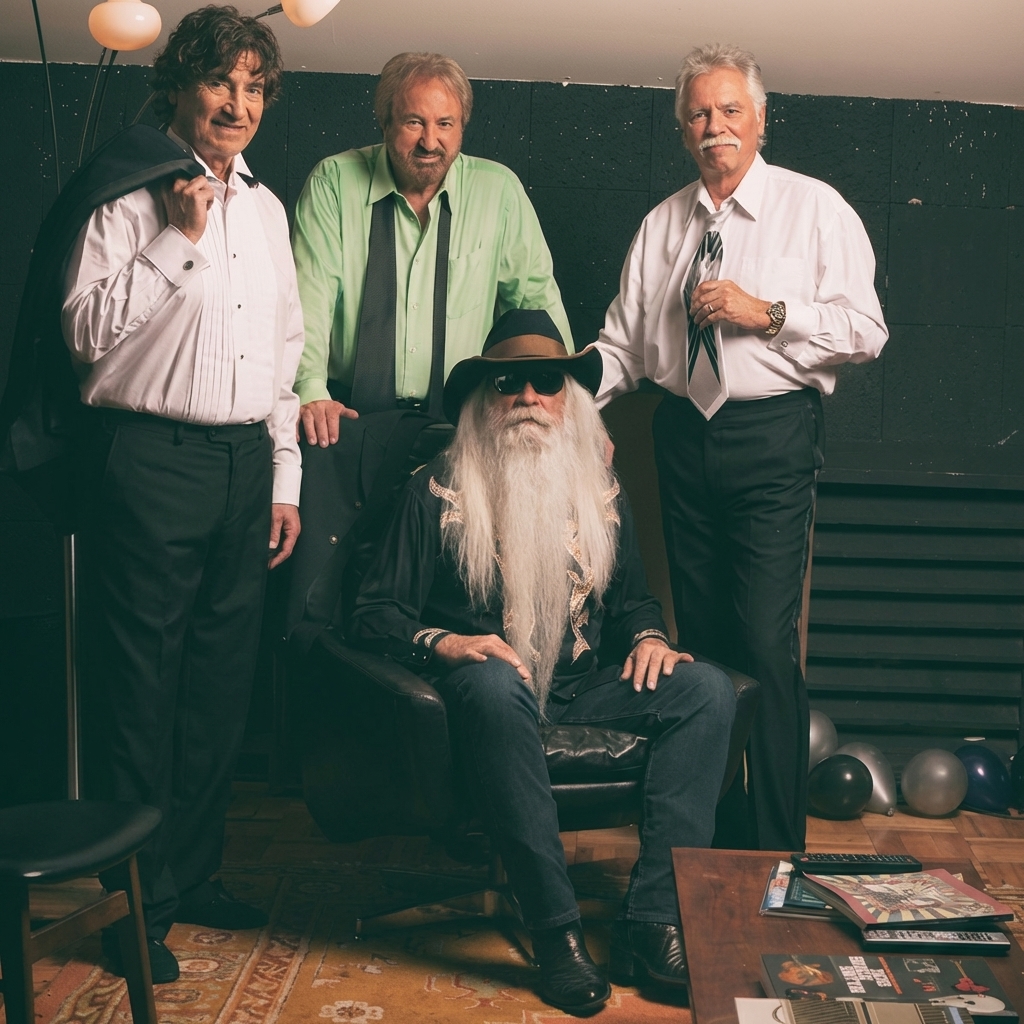
For more than half a century, The Oak Ridge Boys did something that sounds simple until you realize how rare it is.
They stayed a group.
Not just a brand. Not just a famous name with shifting faces and polished replacements. A real group. Four men, four distinct voices, and one sound built on trust more than spotlight. Across decades of touring, changing audiences, and 17 No. 1 hits, they understood something a lot of acts forget the moment success arrives: harmony only works when nobody tries to win it alone.
And somewhere in the middle of that sound stood William Lee Golden.
With the long silver beard, the unmistakable presence, and that deep, grounded voice, William Lee Golden never sounded like anybody else. He did not need to. That was the point. The Oak Ridge Boys were never strongest when they blended into sameness. They were strongest when each voice kept its shape and still made room for the others.
Backstage, that truth was understood without much discussion. Duane Allen once joked that you could not manufacture a voice like William Lee Golden's. You could only protect it. That line may have made everyone laugh, but it carried something serious inside it. Some voices are not interchangeable. Some people do not just fill a position. They become part of the architecture.
The Sound Was Never About Ego
The Oak Ridge Boys knew the temptation that lives inside any long career. After enough applause, enough awards, enough nights under hot stage lights, it becomes easy for singers to lean a little too hard into self-importance. One voice starts pushing harder. One personality grows louder. One man begins to sing as if the whole song belongs to him.
That was never supposed to happen here.
Among The Oak Ridge Boys, there was a rule that mattered more than any chart placement:
"Sing the harmony. Not the ego."
It sounds like advice about music, but it was really advice about survival. About brotherhood. About how a group stays together long enough to become part of people's lives. Fans did not come to hear four men fighting for attention. Fans came for that feeling only The Oak Ridge Boys could create together — a sound with warmth, grit, conviction, and just enough restraint to let the song breathe.
William Lee Golden understood that as deeply as anyone.
The Night Everything Felt Different
One evening, before a show, the room felt more reflective than usual. The energy backstage was calm, almost still. No one was nervous. No one was rushing. After all those years, the mechanics of performance had become second nature. Jackets were adjusted. Microphones checked. A few quiet jokes were shared. The usual rhythm of another concert was underway.
Then William Lee Golden said something that made the others stop what they were doing.
It was not dramatic. It was not a speech dressed up for memory. It came out the way the most honest things often do — quietly.
William Lee Golden looked at the group and reminded them that the songs were never really theirs to keep.
They were carrying them for the people who came through the doors.
For the couples who had danced to them decades earlier. For the widowers who still played them in quiet kitchens. For the families driving home with the radio low. For the people who had aged with these harmonies and found pieces of their own lives inside them.
In that moment, the music stopped being routine. It became responsibility.
No one answered right away. They did not need to. The truth of it settled over the room all at once. After thousands of stages and years of repetition, William Lee Golden had given them a new way to walk out there. Not as veterans guarding a legacy. Not as stars protecting a reputation. But as servants to something larger than themselves.
Why That Voice Still Matters
When The Oak Ridge Boys finally stepped into the lights that night, nothing visible had changed. The audience still saw the same familiar figures. The same smiles. The same polished timing. The same beloved songs waiting to rise into the room.
But inside the performance, something had shifted.
They sang with a little more care. A little more gratitude. A little less ownership.
And maybe that is why William Lee Golden's voice was never something the group tried to replace. It was not only the sound. It was the spirit behind it. William Lee Golden carried the reminder that harmony is not about being heard above everyone else. It is about knowing exactly where your voice belongs, then giving it fully.
That lesson shaped more than one night. It shaped a legacy.
After 50 years, 17 No. 1 hits, and countless miles on the road, The Oak Ridge Boys still represent something rare in music: men who understood that staying together takes more than talent. It takes humility. It takes listening. It takes the kind of wisdom that can still stop a room just before showtime.
And sometimes, it takes one unforgettable voice reminding everyone else why they started singing in the first place.