
Introduction

The Haunting Power of Elvis Presley's Omaha Concert — A Night That Became History Before Anyone Knew It
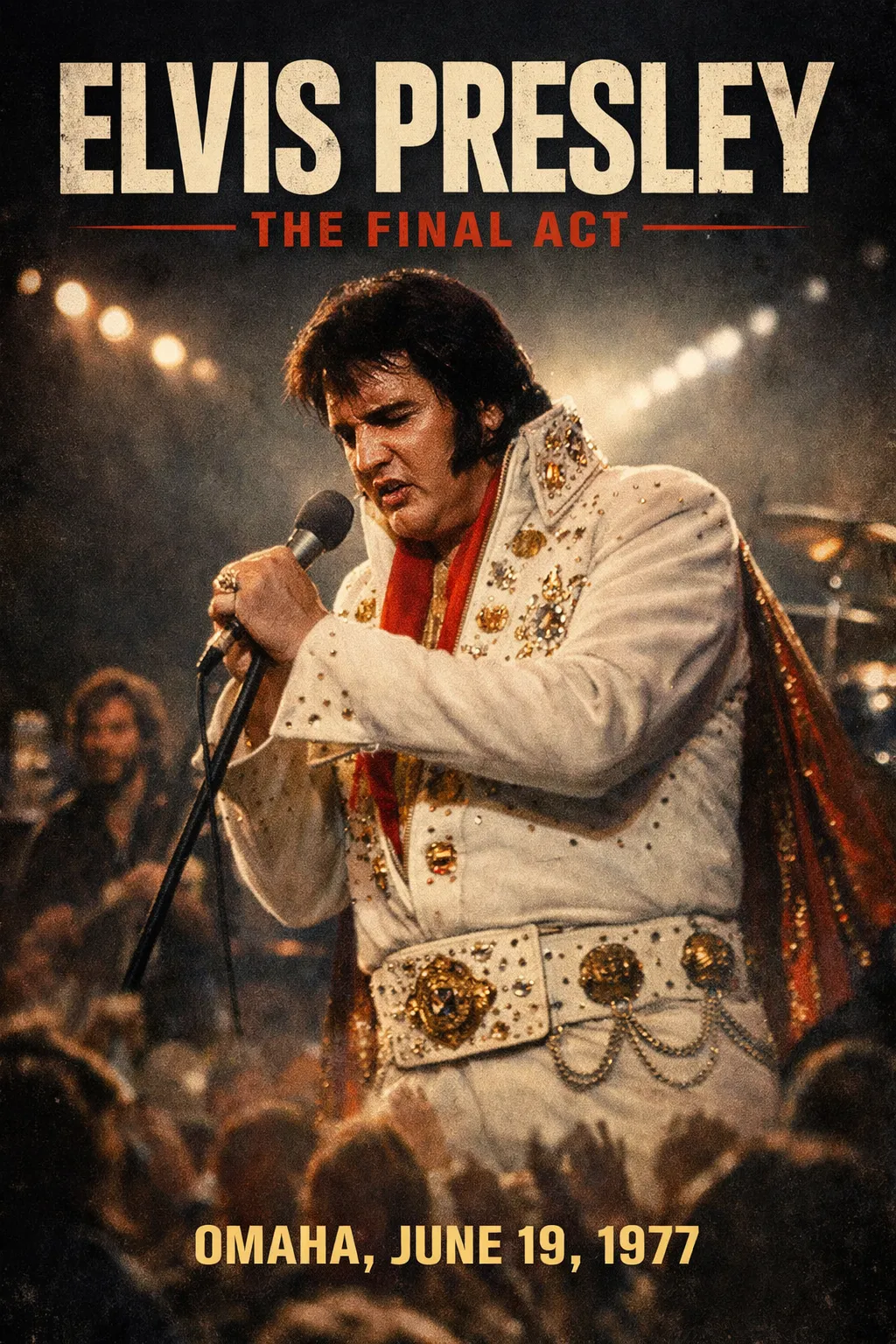
On June 19, 1977, inside the Civic Auditorium in Omaha, Nebraska, thousands of fans gathered for what they believed would be another unforgettable evening with Elvis Presley. There was excitement in the air, the kind that had followed Elvis for more than two decades. For many in the audience, this wasn't just a concert—it was a reunion with a voice that had shaped their youth, their memories, and their sense of belonging in a changing world.
At the time, nothing about that night suggested it would become one of the most discussed performances in music history. It was simply another stop on a demanding tour schedule. Yet in hindsight, the Omaha concert would take on a meaning far deeper than anyone inside that arena could have imagined.
Less than two months later, on August 16, 1977, Elvis would be gone.
And suddenly, everything about that evening changed.
What had once been an ordinary performance became something almost sacred—a final chapter captured on film, a living portrait of an artist standing at the edge of his own legend. For historians, critics, and lifelong fans alike, the Omaha concert would become both a point of fascination and a source of quiet reflection.
When Elvis stepped onto the stage that night, the reaction was immediate—but not entirely what many expected.
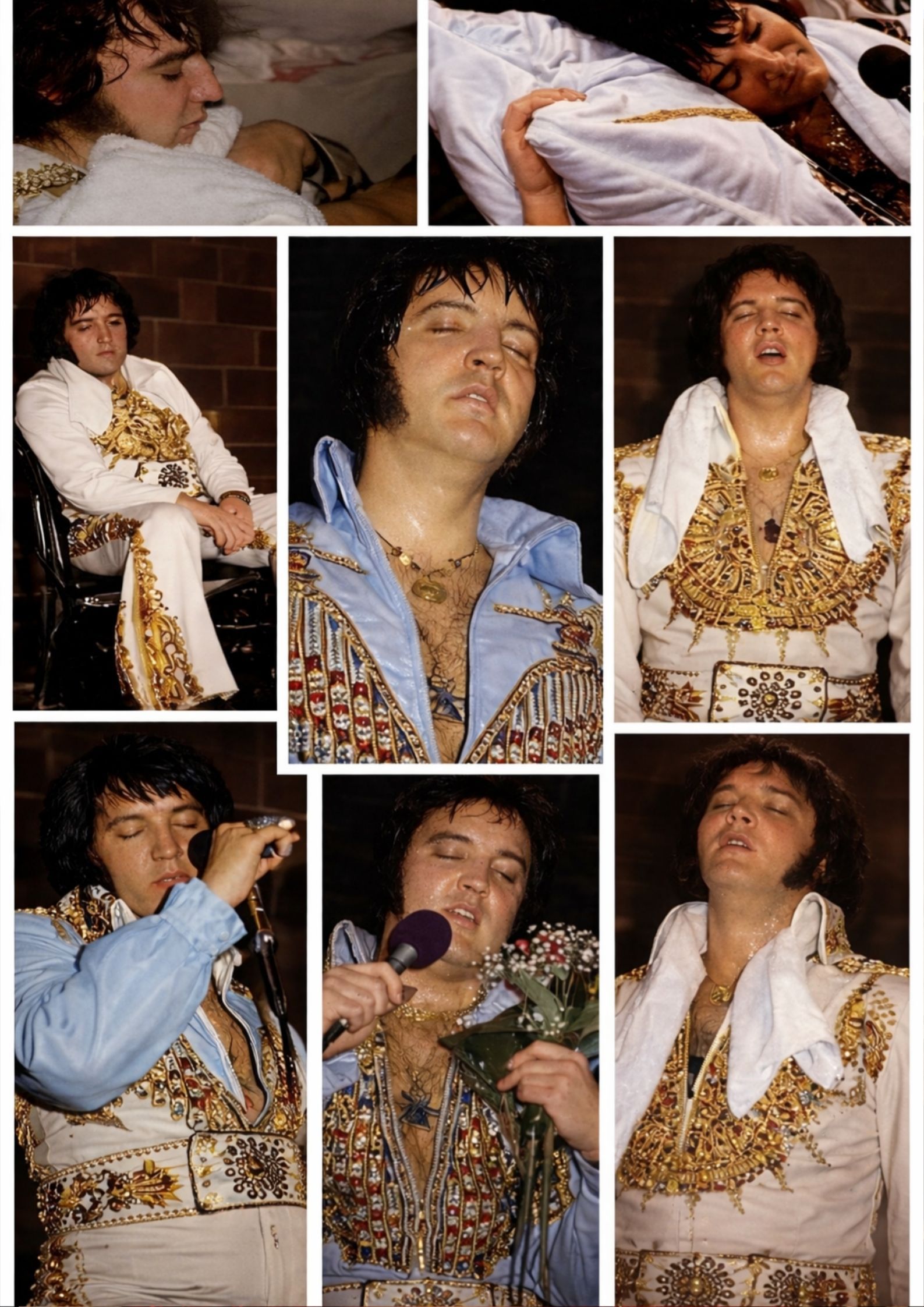
There was still applause, still excitement, still that unmistakable surge of energy that followed him wherever he went. But beneath it, there was also a subtle shift in perception. The man before them was no longer the lightning-fast performer of the 1950s or the cinematic icon of the 1960s. He appeared heavier, slower, even fragile in ways that startled some in the audience.
Over time, critics would seize on these images, using them as evidence of decline.
But to focus only on what was visible is to miss what truly mattered.
Because when Elvis began to sing, something remarkable happened.
The years, the exhaustion, the weight of expectation—all of it seemed to fall away, if only for a moment. As the band moved into familiar openings like "See See Rider" and "Love Me," the audience responded instantly. The connection was still there—alive, electric, and deeply personal.
His voice had changed, yes. It was rougher, less polished than in earlier years. But in its place was something arguably more powerful: emotion stripped of pretense. Each lyric carried a sense of urgency, as if every word mattered more than ever before.
And nowhere was that more evident than in his performance of "How Great Thou Art."
Standing beneath the stage lights, dressed in one of his iconic white jumpsuits, Elvis delivered the gospel hymn with a depth that transcended technique. This was not the flawless, controlled performance of a younger man. It was something far rarer—honest, vulnerable, and profoundly human.
Those who have revisited the footage often describe it as almost spiritual.
It felt less like entertainment and more like testimony.
There was a sense—difficult to explain, impossible to ignore—that Elvis was giving something of himself in that moment, something deeper than performance. As if he understood, perhaps not consciously but instinctively, that time was no longer something to be taken for granted.
Throughout the evening, that duality remained.
There were flashes of the Elvis fans had always loved—playful smiles, quick jokes, moments of charm directed at the front rows. He acknowledged the audience with warmth, even humor, drawing strength from their presence. Yet woven into those moments were quieter glimpses of vulnerability, pauses that hinted at the effort it took simply to continue.
For those in attendance, the experience left an imprint that would only deepen with time.
In the years that followed, as recordings of the Omaha concert circulated, reactions varied. Some viewers saw only the physical toll, focusing on what had changed. Others saw something entirely different: resilience. Determination. A man who, despite everything, refused to step away from the stage or the people who had supported him for so long.
And perhaps that is what gives this performance its lasting power.
It is not a perfect concert. It is not the polished peak of a superstar at his height.
It is something more meaningful.
It is the sound of an artist continuing to give, even when the cost had grown heavy.
When the final notes faded and Elvis waved goodbye to the Omaha crowd, there was no sense of finality in the room. No grand realization that history had just been written. Fans simply applauded, gathered their belongings, and carried the memory home as one more cherished night with the King.
Only later would the truth settle in.
That they had witnessed not just a performance—but a moment suspended between presence and memory.
Today, the Omaha concert stands as one of the most haunting chapters in the story of Elvis Presley. Not because it shows perfection, but because it reveals something far more enduring: the humanity behind the legend.
And in that fragile, flickering space between strength and vulnerability, Elvis reminded the world of something timeless—
That true greatness is not measured only in moments of triumph, but in the quiet courage to keep going, even when the spotlight grows heavy.
Because legends are not defined by how they shine at their peak.
They are defined by how they endure.
And on that summer night in Omaha, Elvis Presley endured—and in doing so, ensured that he would never truly fade.