

Introduction
WHEN THE WORLD FEELS UNSTEADY… DON WILLIAMS' "LORD, I HOPE THIS DAY IS GOOD" STILL WHISPERS WHAT MILLIONS ARE AFRAID TO SAY OUT LOUD
There are moments in history when the world seems to move a little too fast—and feel a little too fragile.
Headlines arrive without pause. Words like conflict, retaliation, and uncertainty begin to repeat themselves across television screens and phone notifications. Conversations shift. People listen more closely. Families sit quietly in living rooms, watching events unfold from thousands of miles away, yet somehow feeling them just as deeply.
And in moments like these, something unexpected happens.
The noise becomes too much.
And people begin to search—not for louder answers, but for something softer.
Something human.
For many, that place is found in music.
And few voices have ever offered that kind of quiet refuge the way Don Williams did.
Long before today's headlines, before the current tensions that now weigh heavily on so many hearts, Don Williams recorded a song that never aimed to address world events. It wasn't written as commentary. It wasn't meant to explain anything happening beyond the personal.
But somehow, decades later, it feels as though it was written for nights exactly like this.
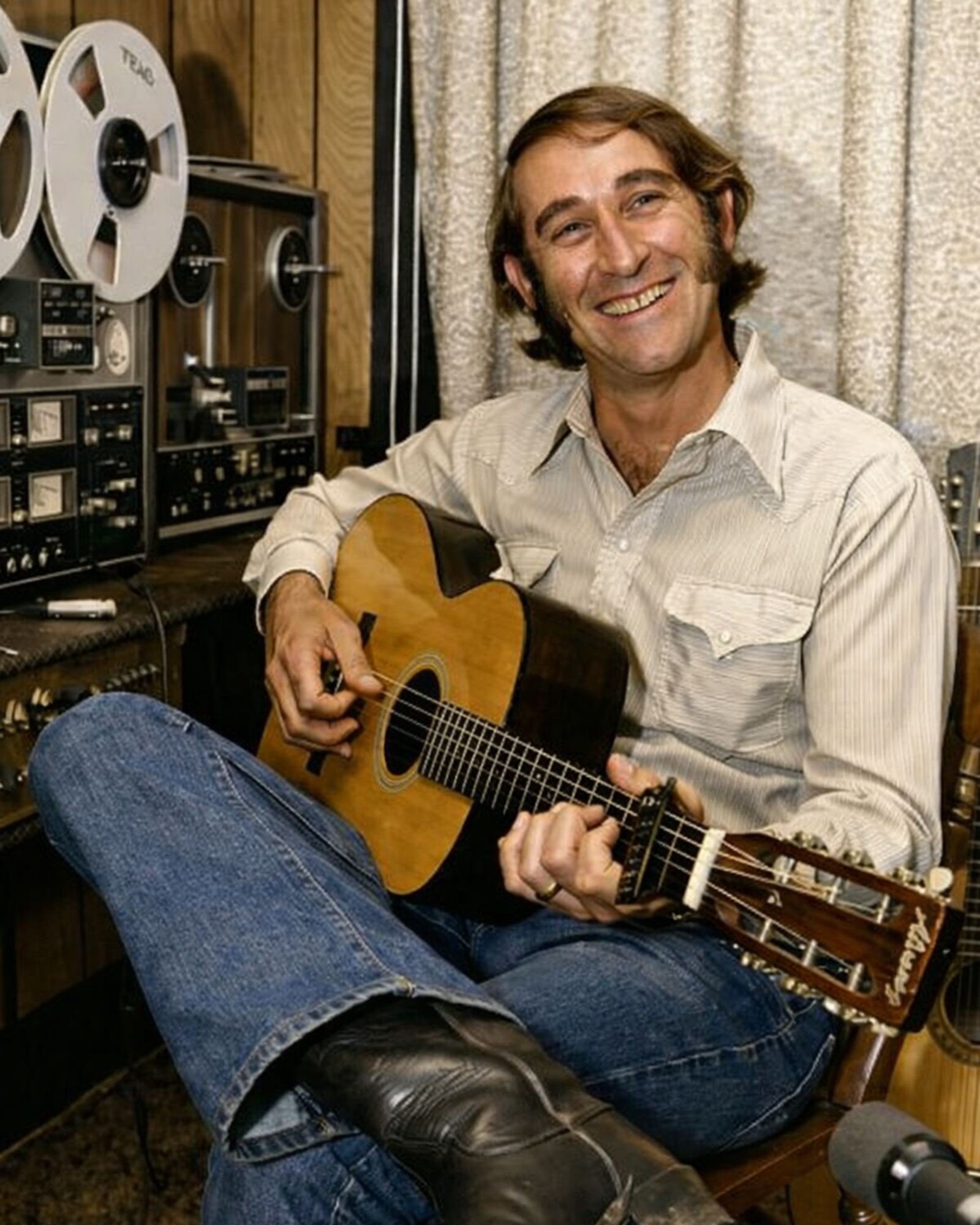
"Lord, I hope this day is good…
I'm feeling empty and misunderstood."
The words are simple.
There is no complexity in them.
No attempt to impress.
And perhaps that is why they endure.
Because when the world feels uncertain, simplicity becomes its own kind of strength.
Don Williams, often called the "Gentle Giant," built his career on something rare in modern music—restraint. He did not raise his voice to command attention. He did not rely on spectacle. He stood still, sang plainly, and trusted that honesty would travel further than volume.
And it did.
Songs like "Lord, I Hope This Day Is Good" do not try to solve problems. They do not offer solutions or conclusions. They simply acknowledge something deeply human: that there are days when life feels heavier than expected, when understanding feels out of reach, and when the only thing left to do is hope.
Not loudly.
But quietly.
In times of rising global tension—when reports of military movement and fragile diplomacy begin to shape the emotional atmosphere of everyday life—people often find themselves carrying worries they cannot fully articulate. Parents think about young men and women serving far from home. Spouses wait for messages that say everything is still okay. Children sense unease even when no one speaks it directly.
And in those quiet, private spaces, a song like this begins to take on new meaning.
It becomes more than music.
It becomes a companion.
Because while the song was never written about war, its message moves easily into any moment where uncertainty exists. It becomes a quiet prayer shared across thousands of homes—spoken in different voices, but carrying the same hope.
Hope for safety.
Hope for return.
Hope that tomorrow will not carry more weight than today.
What makes this song so powerful is not what it says, but how it says it.
There is no urgency in the delivery.
No dramatic rise in emotion.
Just a steady voice, moving gently through each line, allowing the listener to meet it where they are. The arrangement follows that same philosophy—acoustic, unhurried, almost conversational. It does not rush the moment. It holds it.
And in that stillness, something remarkable happens.
People begin to listen—not just to the song, but to themselves.
Because beneath the headlines and the conversations, there is a shared experience that connects people across generations: the desire for peace, for stability, for a sense that life will remain intact even when the world feels uncertain.
Older listeners, in particular, understand this deeply.
They have lived through moments like this before—times when the future felt unclear, when news carried more questions than answers. They know that while the specifics may change, the emotional weight remains familiar. And they also know that during those times, it is often the simplest things that offer the greatest comfort.
A familiar voice.
A quiet melody.
A line that feels like it could have come from their own heart.
"Lord, I hope this day is good."
It is not a demand.
It is not a declaration.
It is a request.
A humble one.
And perhaps that is why it continues to resonate.
Because it does not assume control over what cannot be controlled. It does not pretend to understand what is unfolding on a global scale. It simply acknowledges that, in the face of uncertainty, hope is still worth holding onto—even in its smallest form.
Don Williams never claimed that music could fix the world.
But songs like this remind us of something just as important.
They remind us that we are not alone.
That across cities, across states, across oceans, there are countless people sitting quietly, carrying the same thoughts, the same concerns, the same quiet prayers.
And in that shared experience, there is a kind of comfort.
A reminder that even when the world feels unsteady, there is still something steady within us.
The ability to hope.
The ability to care.
The ability to pause, breathe, and hold onto something simple.
In the end, that may be what gives "Lord, I Hope This Day Is Good" its lasting power.
It does not belong to one moment.
It belongs to every moment when life feels uncertain.
And in times like these, it no longer sounds like just a song.
It sounds like a prayer—whispered softly, but carried far.