
Introduction
WHEN THE SUPER BOWL BECAME A CULTURE DEBATE — Why the Petition for George Strait Over Bad Bunny Touched a Nerve Across America
There are music stories that come and go in a single news cycle, and then there are moments that reveal something deeper about the country listening.
The petition calling for George Strait to replace Bad Bunny at the Super Bowl halftime show was one of those moments.
It was not simply about two artists. It was about identity, memory, generational taste, and the question of what Americans believe the biggest stage in popular entertainment should represent. The petition did exist. It appeared on Change.org in early October 2025 after the NFL, Apple Music, and Roc Nation officially announced that Bad Bunny would headline the Super Bowl LX halftime show in Santa Clara on February 8, 2026. In a petition update published days later, the organizer said the campaign had already drawn major attention and was framed around keeping the halftime show "family-friendly" and centered on "American music heritage."
By April 2026, of course, the debate belongs to history. Bad Bunny was not replaced. He performed the halftime show at Super Bowl LX, and the event became a historic moment in its own right.
But the petition still matters, because it revealed how powerfully music can stir feelings that go far beyond music itself.
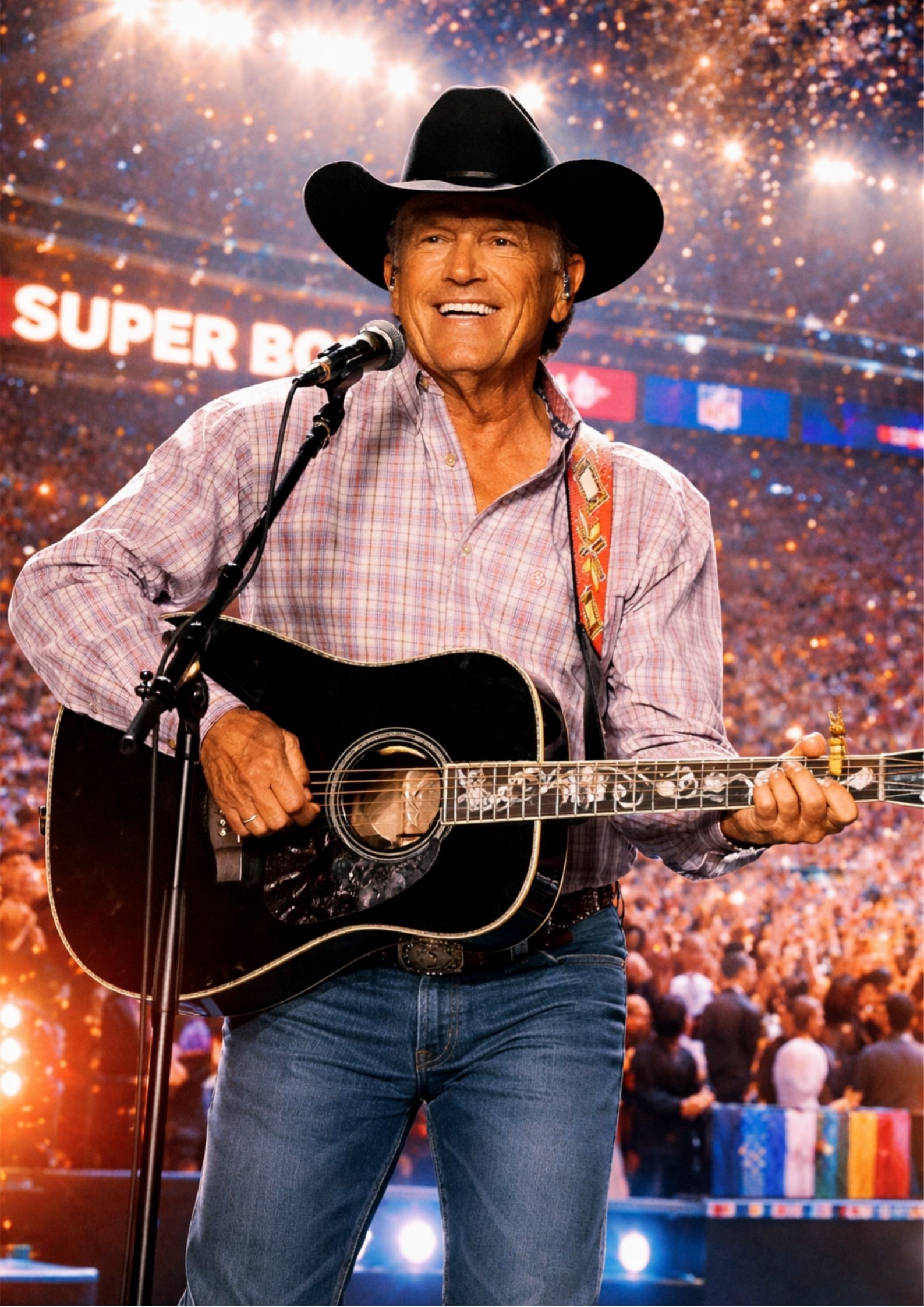
For many older Americans, George Strait represents something steady. He is not merely a country star. He is a symbol of continuity, restraint, and a distinctly American musical tradition that values story, melody, and emotional clarity. His voice has carried weddings, heartbreaks, road trips, and quiet evenings for decades. For listeners who grew up with classic country on the radio, the idea of George Strait on the Super Bowl stage likely felt less like a stunt and more like a homecoming.
That emotional attachment should not be dismissed.
It comes from memory.
And memory is one of the strongest forces in public life.
At the same time, the NFL's choice of Bad Bunny was hardly random. By the time of the announcement, he was one of the most globally influential artists in the world, and the league made the pick official months in advance. The halftime show has long aimed to balance spectacle, relevance, and worldwide appeal, not merely nostalgia. From the NFL's perspective, Bad Bunny represented cultural reach on a massive scale.
That is where the tension began.
To one side, the choice reflected the future: international, multilingual, modern, and commercially undeniable.
To the other, it symbolized a move away from values some viewers still associate with the Super Bowl itself: broad family appeal, familiar musical language, and a sense of cultural common ground.
This was never just a petition about replacing one singer with another.
It was a petition about who gets to define "American culture."
That question, perhaps more than anything else, is why the story resonated.
Older readers, especially, understand that cultural change rarely arrives quietly. It often comes wrapped in headlines, arguments, and emotionally charged symbols. A halftime show becomes a referendum. A booking choice becomes a proxy war over tradition and belonging. Suddenly, what should be entertainment begins to carry the weight of national self-definition.
And yet, there is another layer worth considering.
George Strait and Bad Bunny do not need to be enemies in this story.

One represents an enduring American tradition. The other represents the changing shape of American and global popular culture. These truths can coexist, even if public debate often insists on turning them into opposites. The petition drew strength from a sense of loss. But the NFL announcement drew strength from a sense of momentum. Both emotions are real. Both reflect something honest about the audience.
That is why the backlash was meaningful even though it did not change the outcome.
It told us that millions of viewers are still hungry for musical choices that feel rooted, unifying, and recognizably tied to the soundtrack of their own lives. At the same time, the halftime show itself confirmed that the NFL remains committed to booking artists with enormous contemporary reach.
In that sense, the petition was not a victory or a defeat.
It was a signal.
A reminder that America is listening through different generations at once.
Some listeners want innovation. Others want familiarity. Some hear national celebration in a global superstar. Others hear it in the warm steadiness of a country legend who has spent decades singing plainly and beautifully about love, loyalty, and home.
There is something poignant in that contrast.
Because at its heart, this was never only about George Strait, and it was never only about Bad Bunny.
It was about the emotional meaning people bring to music.
Older fans often do not hear songs as disposable entertainment. They hear life chapters. They hear eras. They hear values. So when a name is placed on the Super Bowl stage, the reaction is rarely neutral. It touches memory, identity, and belonging all at once.
That is why this story lingered.
Not because the petition changed history.
But because it exposed the fault line between heritage and reinvention.
In the end, the NFL stayed with its choice, Bad Bunny took the stage, and the moment passed into the record books. Yet the feelings behind the petition remain worth understanding. They speak to a generation that still wants to see dignity, tradition, and emotional familiarity honored in the public square.
And perhaps that is the lasting lesson.
In America, music is never just background noise.
It is memory.
It is identity.
And sometimes, even a halftime show can reveal the country's heart.